Sales teams in 2026 do not need more tools. They need fewer repetitive tasks, less manual research, and a faster way to move from lead discovery to qualified conversations.
The best AI sales tools help automate work like lead sourcing, enrichment, qualification, outreach, follow-up, and CRM updates. But not every platform is effective in the same way. Some are better for enrichment, some for sales engagement, and some for full end-to-end outbound execution.
This guide compares the most effective AI solutions for automating sales tasks in 2026 and explains which tool is best for which type of team.
TL;DR
The most effective AI solutions for automating sales tasks in 2026 are Starnus, Apollo, Clay, HubSpot Sales Hub, Outreach, Reply.io, and Salesloft.
- Starnus is best for lean teams that want end-to-end outbound automation.
- Apollo is best for teams that want a broad database plus prospecting and outreach.
- Clay is best for enrichment-heavy and custom workflow setups.
- HubSpot Sales Hub is best for teams already running on HubSpot.
- Outreach is best for larger teams focused on execution and coaching.
- Reply.io is best for teams that want agent-style outbound automation.
- Salesloft is best for teams that want AI-guided next-best actions and workflow prioritization.
For most founders, SMBs, and lean GTM teams, Starnus is the best overall fit because it connects lead sourcing, enrichment, personalization, outreach, and follow-up in one workflow.
Quick Comparison Table
| Tool | Best for | Main strength | Main tradeoff |
|---|---|---|---|
| Starnus | Lean outbound teams | End-to-end automation from sourcing to follow-up | Less suited to teams wanting very custom ops-heavy builds |
| Apollo | All-in-one prospecting | Database, prospecting, outreach, and AI assistance in one platform | More traditional sales platform feel |
| Clay | Custom workflows | Deep enrichment and AI research workflows | More setup and more moving parts |
| HubSpot Sales Hub | HubSpot-first teams | CRM-native automation, enrichment, and qualification | Best only if your stack already lives in HubSpot |
| Outreach | Enterprise sales teams | Sequencing, coaching, conversation intelligence | Higher complexity and enterprise-style rollout |
| Reply.io | Lean teams wanting AI SDR support | Agentic multichannel outreach and automation | Less broad than full platform ecosystems |
| Salesloft | Guided rep execution | AI-prioritized workflows and next-best actions | Best for more mature revenue orgs |
Which sales tasks should you automate first?
The best way to automate sales tasks is not to automate everything at once. Start with the most repetitive and time-consuming work:
- lead sourcing
- contact and company enrichment
- lead qualification
- personalized first-touch outreach
- follow-up sequences
- CRM logging and updates
If your team still spends too much time building lists and sending repetitive messages, that is usually the highest-leverage place to start.
1. Starnus
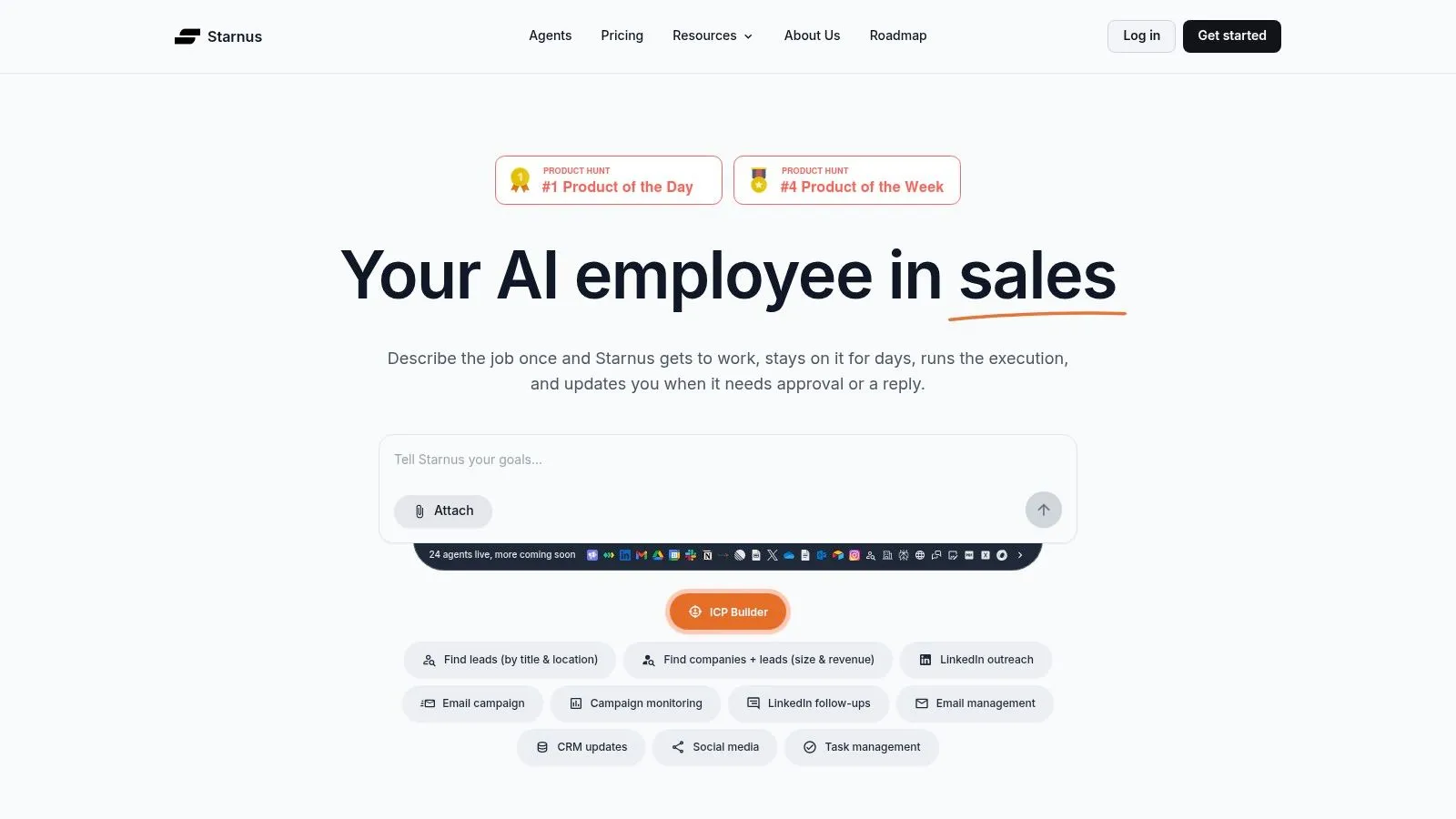
Starnus is one of the strongest options for teams that want to automate sales tasks without building a fragmented stack. Instead of solving just one part of the workflow, it is designed to connect lead sourcing, enrichment, qualification, personalization, outreach, and follow-up in one system.
That makes it especially useful for founders, SMBs, and lean GTM teams that do not want to juggle multiple separate tools just to run outbound.
Why it stands out
- Automates more of the outbound workflow end to end
- Reduces tool switching and workflow fragmentation
- Supports personalized email and LinkedIn outreach
- Good fit for teams that want execution, not just analysis
Best for
- founders
- SMBs
- lean outbound teams
- agencies wanting more automation with less manual work
Main tradeoff
Starnus is strongest for outbound automation, so teams with highly specialized enterprise sales processes may still want complementary tools for deeper call intelligence, forecasting, or broader revenue operations.
**Why it is one of the most effective AI solutions in 2026**
Many AI sales tools automate one layer of the process. Starnus stands out because it is built around automating the actual outbound motion from start to finish. For teams that care more about getting qualified conversations than managing more software, that is a major advantage.
Website: https://starnus.com
2. Apollo.io
Apollo.io has solidified its position as a go-to platform for sales teams aiming to consolidate their tech stack. It uniquely combines a massive B2B contact database with a multi-channel engagement suite, powered by an increasingly capable AI engine. This integrated approach is its core differentiator; it allows teams to manage prospecting, outreach, and initial analysis within a single, cohesive environment.
For teams looking to automate sales tasks, Apollo.io provides a powerful, all-in-one solution. Its strength lies in eliminating the friction between finding prospects and engaging them. The platform’s AI Assistant, which saw its general availability release in early 2026, interprets natural language commands to build targeted lead lists, draft personalized email sequences, and even suggest optimizations based on performance data. This turns what was once a multi-step, click-heavy process into a simple conversational request.
Key Features and Strategic Value
Apollo's AI functionalities are woven directly into the sales workflow, making them practical for daily use.
- AI-Assisted Prospecting: Users can ask the AI Assistant, "Find me VPs of Marketing at SaaS companies in California with 50-200 employees." The system generates a verified contact list, saving hours of manual filtering.
- Intelligent Sequencing: The AI not only helps build email and call sequences but also A/B tests subject lines and call-to-action placement to identify what resonates best with a specific audience.
- Conversation Intelligence: The built-in dialer uses AI to transcribe calls, summarize key points, and identify action items. This ensures no follow-up opportunities are missed and provides coaching insights for managers.
- Data Enrichment: Native integrations with CRMs like Salesforce and HubSpot keep records synchronized. Apollo's AI can automatically enrich existing contacts with fresh data, ensuring your database remains accurate and valuable. For a deeper dive into how Apollo stacks up against other data sources, you can compare the leading B2B data providers and see which best fits your needs.
Pricing and Access
Apollo.io operates on a freemium model with tiered pricing that scales based on credit usage and feature access. The free plan is generous, offering limited credits for teams to test the core functionality. Paid plans (Standard, Professional, and Custom) unlock higher credit allowances, advanced AI features, and deeper analytics.
Practical Tip: Be mindful of credit consumption. Credits are used for revealing contact information and data enrichment. Plan your prospecting activities to align with your tier's monthly allowance to avoid unexpected overage charges. The predictability of costs can be a challenge for rapidly scaling teams, so it's wise to review usage reports regularly.
Apollo.io earns its place in this 2026 list by providing a unified and AI-driven platform that directly addresses the most time-consuming parts of a sales development representative's (SDR) day. It’s an excellent choice for small to mid-sized businesses that need a robust, integrated tool to build and manage their sales pipeline without the complexity of juggling multiple disconnected systems.
3. Clay
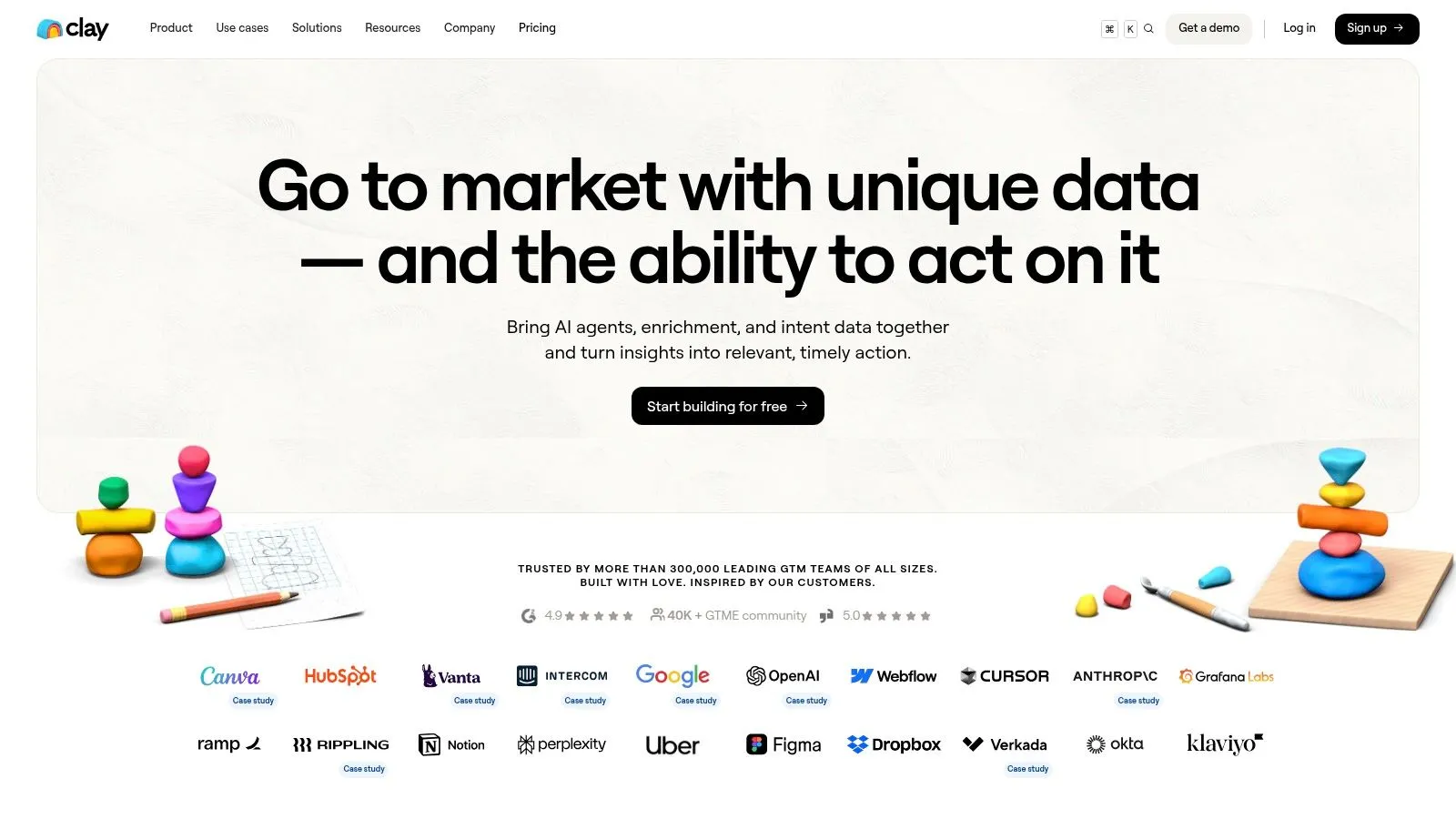
Clay has carved out its niche as the go-to platform for sales and growth teams that refuse to compromise on personalization. It acts as a powerful data automation and enrichment engine, enabling users to build highly specific research signals at scale. Its core differentiator is the "Claygent" AI agent framework, which can perform complex, multi-step web research tasks that were previously only possible through manual human effort.
For teams aiming to automate sales tasks, Clay offers an unparalleled level of custom research capability. It is not an all-in-one outreach tool; instead, it focuses on perfecting the data that fuels outreach. The platform’s visual builder allows users to create and test Claygents, instructing them to find hyper-specific information, like a company's recent funding announcement, a key executive’s latest podcast appearance, or even the specific technologies listed on a prospect's job postings. This transforms generic outreach into true 1:1 communication.
Key Features and Strategic Value
Clay's functionalities are designed for teams that want to build programmatic, data-driven workflows for their outbound motions.
- Claygent AI Research Agents: The platform's standout feature. Users can build custom agents using a visual interface to perform research across the web. For example, "Find the top 3 priorities mentioned in the latest earnings call transcript for this list of companies." This data becomes a powerful personalization token.
- Consolidated Data Marketplace: Clay provides access to over 150 data providers within a single interface. The 2026 pricing updates have made data costs more transparent and affordable, separating them from platform actions and reducing marketplace rates.
- Flexible AI and API Usage: Users can choose between fixed or variable AI pricing depending on the model and can even connect their own API keys (e.g., from OpenAI). This provides advanced control over cost and performance.
- Workflow Orchestration: The platform's Growth plan consolidates deep enrichment with orchestration capabilities, allowing data to be pushed directly to CRMs, ad platforms, and other engagement tools via HTTP APIs. For a better understanding of how this fits into a tech stack, you can explore the top sales engagement platforms to see how they pair with a tool like Clay.
Pricing and Access
Clay operates on a usage-based pricing model that has become more granular in 2026. Costs are broken down into a platform subscription, "Actions" (credits used for running workflow steps like enrichment or AI tasks), and data costs from the marketplace. This new model provides clarity but requires careful planning. Plans range from a Starter tier for individuals to a Growth plan for teams needing full orchestration.
Practical Tip: The new "Actions" metering means that the volume of your orchestration directly impacts cost. Before scaling a campaign, build a small-scale model to accurately forecast your credit and data expenditure. This is especially important for agencies managing multiple client accounts with varying data needs.
Clay earns its spot on this 2026 list by being the best-in-class solution for generating bespoke research signals that power genuinely personalized outreach. It’s the ideal choice for sophisticated RevOps teams, outbound agencies, and companies that understand that the quality of their data is the single biggest lever for improving campaign performance. It works with your existing stack, making it a powerful addition rather than a complete replacement.
4. HubSpot Sales Hub (with HubSpot AI)
HubSpot Sales Hub has cemented its reputation as the central nervous system for sales teams who prioritize a unified customer lifecycle. Its strength is its native integration within the wider HubSpot ecosystem, combining a Smart CRM, engagement tools, and embedded AI into one platform. This all-in-one approach is its main differentiator; it allows sales, marketing, and service teams to work from a single source of truth.
For teams aiming to automate sales tasks, HubSpot offers a deeply integrated solution. The platform excels at removing the administrative burden from a rep's day by connecting lead data directly to outreach and reporting tools. HubSpot AI, woven throughout the Sales Hub and Smart CRM since its 2025 expansion, assists with everything from drafting outreach emails and summarizing call recordings to predicting which deals are most likely to close. This turns repetitive manual work into automated, intelligent workflows.
Key Features and Strategic Value
HubSpot's AI is designed to augment existing sales processes, making it a natural addition to a rep's daily routine.
- Embedded AI Content Generation: Reps can use AI directly within the email composer or sequence builder to generate first-touch emails, follow-ups, and objection-handling responses. It can adapt the tone and content based on a prospect’s industry or role.
- Intelligent Workflow Automation: Higher tiers allow for automatic lead enrollment into sequences based on specific triggers, such as a website visit or content download. This ensures immediate follow-up without manual intervention.
- Conversation Intelligence: The platform’s integrated calling feature records, transcribes, and uses AI to summarize conversations. It identifies keywords, competitor mentions, and action items, providing reps with clear next steps and managers with valuable coaching data.
- Predictive Lead Scoring: HubSpot AI analyzes thousands of data points to score leads and forecast deal outcomes. This helps teams prioritize their efforts on opportunities with the highest probability of closing, improving overall pipeline velocity. For more on this, exploring the connection between CRM and workflow automation can provide deeper context.
Pricing and Access
HubSpot Sales Hub is available in several tiers, starting with free tools and scaling to Professional and Enterprise plans. Pricing is transparent and seat-based, with published costs for each tier and defined onboarding fees for higher-level plans. Advanced AI features, automation, and higher usage limits are typically reserved for the Professional and Enterprise tiers.
Practical Tip: Carefully vet which features are included in each pricing tier during procurement. HubSpot's packaging can change, so what was once in the Professional plan might move to Enterprise. Ensure the specific automation and AI capabilities you need are available in the plan you choose to avoid having to upgrade unexpectedly.
HubSpot earns its spot in this 2026 roundup by offering a powerful, cohesive platform that simplifies the entire sales cycle. It's the ideal choice for businesses already invested in the HubSpot ecosystem or for any company that wants the simplicity of a single vendor for its CRM, engagement, and AI-powered sales tools, backed by extensive support and documentation.
5. Outreach
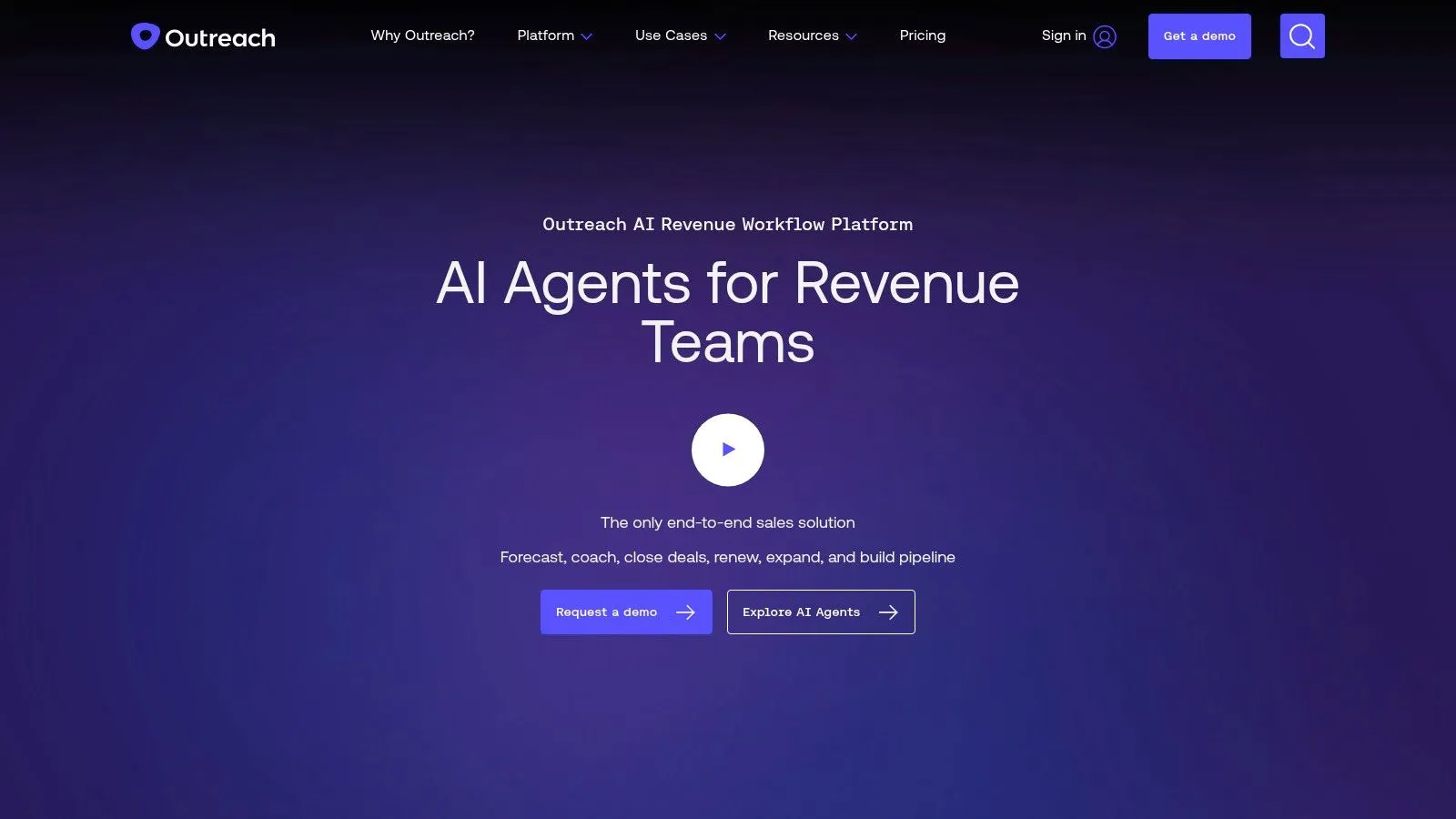
Outreach has long been an enterprise-grade staple for sales execution, and its 2026 iteration solidifies its dominance by deeply embedding AI into every facet of the sales cycle. It's designed for scale, providing a powerful platform for sequencing, pipeline management, and, most notably, conversation intelligence through its proprietary AI, Kaia. Its key distinction is its focus on standardizing excellence across large sales organizations, from individual reps to management.
For teams determined to automate sales tasks, Outreach offers a mature, battle-tested solution. Its strength is in operationalizing AI to improve not just efficiency but also effectiveness and consistency. Recent updates, including the general availability of AI Summaries and expanded mobile features for Kaia, ensure that insights and coaching are available whether a rep is at their desk or in the field. This transforms sales from a series of disparate activities into a cohesive, data-driven system.
Key Features and Strategic Value
Outreach's AI capabilities are purpose-built to support and guide sales reps through complex deals, making it a critical tool for enterprise-level success.
- Kaia AI Conversation Intelligence: Kaia acts as a real-time assistant during calls, surfacing relevant "battlecards" to handle objections and providing content when key topics are mentioned. After the call, it generates summaries, tracks topics and sentiment, and identifies action items, ensuring rigorous follow-up.
- Automated Sequencing and Workflows: The platform automates multi-channel outreach through email, calls, and social tasks. It intelligently adjusts sequences based on buyer interactions, such as opening an email or booking a meeting, ensuring reps focus on engaged prospects.
- Deal and Pipeline Management: AI-driven deal views provide insights into pipeline health, highlighting at-risk opportunities and suggesting next best actions. This moves beyond simple task management to active deal strategy support.
- Enablement and Coaching at Scale: With Kaia's mobile recording and the ability to share and compose directly from AI summaries, managers can coach reps consistently. New workflow enhancements standardize documentation and follow-ups, embedding best practices across the entire team.
Pricing and Access
Outreach follows an enterprise sales model with quote-based pricing. Access is typically granted after a demo and consultation process, with contracts tailored to the size and needs of the organization. There is no free or self-service plan; it's designed for companies ready to make a significant investment in their sales technology stack. The complexity of its features often requires a planned rollout and dedicated administration.
Practical Tip: Outreach is a powerful but complex system. Successful implementation requires buy-in from leadership and a dedicated internal champion or administrator. Before committing, map out your exact sales processes and identify how each Outreach feature will support them to ensure you can justify the investment and achieve a high adoption rate.
Outreach earns its spot in our 2026 list by providing a comprehensive, AI-powered platform for large and scaling sales teams that demand consistency and deep analytical insight. It is the premier choice for enterprises that need to manage complex sales cycles and empower hundreds or thousands of reps with standardized, intelligent workflows and coaching.
6. Reply.io (Jason AI)
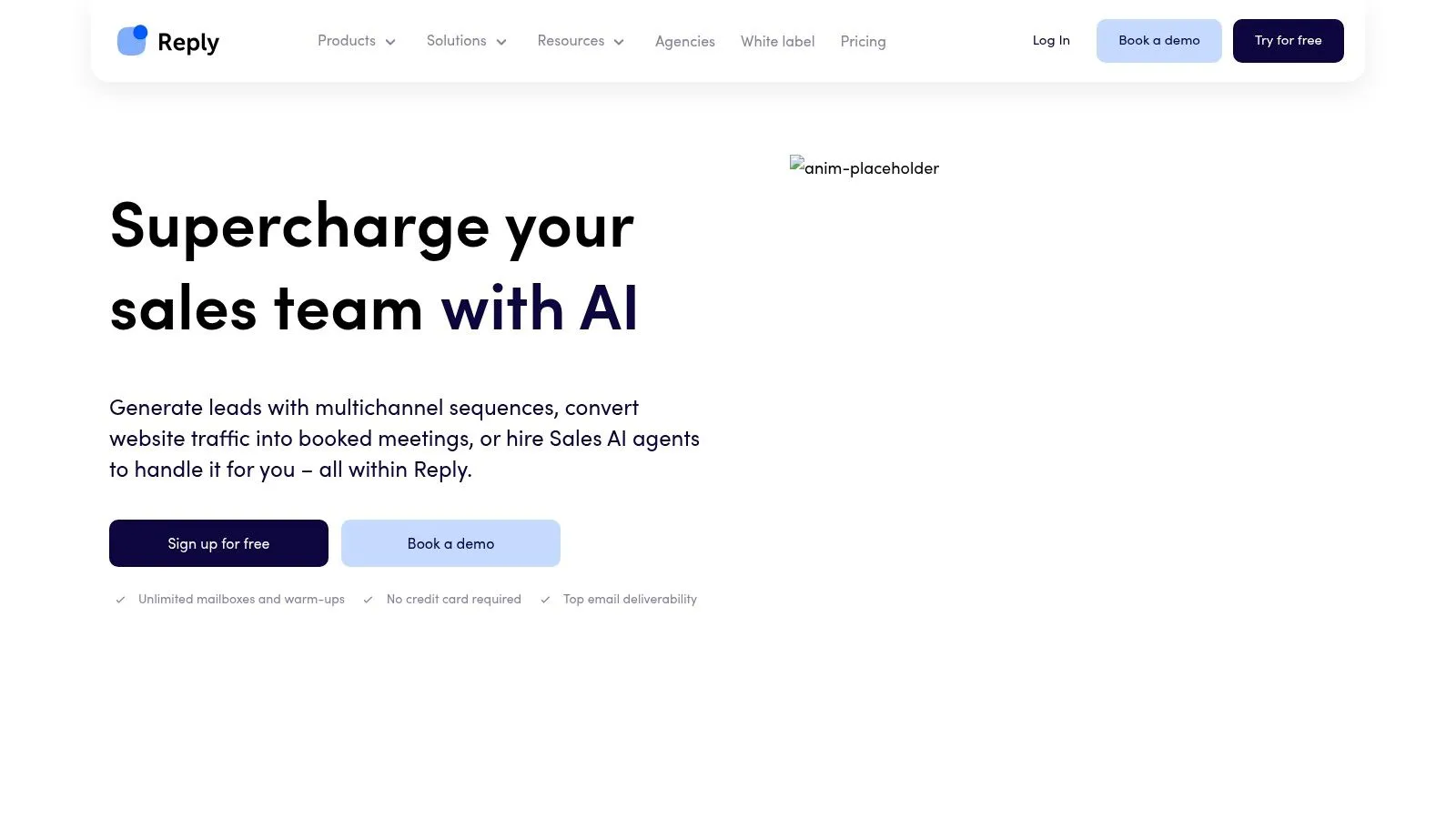
Reply.io has carved out a unique space in the sales automation market by focusing on agentic AI execution. While many platforms offer AI-assisted tools, Reply.io's "Jason AI" acts as a fully functional AI Sales Development Representative. It learns your ideal customer profile (ICP) and playbooks to autonomously handle prospecting, multichannel outreach, and even initial reply management, making it a compelling option for teams that need to scale pipeline without increasing headcount.
Its core differentiator is the shift from a "copilot" model to a more autonomous "autopilot" system. For teams looking to automate sales tasks, Reply.io offers a way to delegate entire chunks of the outbound process. Jason AI doesn't just suggest actions; it executes them. It builds lead lists, crafts and personalizes messages across email and LinkedIn, runs sequences, and intelligently handles incoming replies to book meetings directly onto your calendar.
Key Features and Strategic Value
Reply.io's features are designed around the concept of an AI agent that complements or replaces manual SDR functions. This makes its value proposition particularly strong for lean teams.
- Autonomous AI Agent (Jason AI): The central feature is Jason AI, which you train on your specific sales strategy. It finds prospects, personalizes outreach using real-time data, and manages conversations to book meetings. This agentic approach significantly reduces the manual workload of prospecting and initial engagement.
- Multichannel Sequence Automation: The platform supports robust automation across email, LinkedIn, calls, and SMS. A key benefit is the inclusion of unlimited mailboxes on its plans, along with built-in deliverability tools, which is critical for running high-volume outbound campaigns.
- Autopilot vs. Copilot Modes: Users can choose their level of AI involvement. "Autopilot" mode allows Jason AI to run the entire process independently, while "Copilot" mode requires human approval for key steps, giving teams control while still offloading the heavy lifting.
- Integrated B2B Data & Ecosystem: Higher-tier plans provide access to a B2B database and integrate with essential sales tools. While not as deep as a standalone data provider, this native access removes friction and is often sufficient for many outbound campaigns. You can learn more about their capabilities at https://reply.io.
Pricing and Access
Reply.io’s pricing is structured in tiers based on the number of active contacts and feature access, which is straightforward for budget planning. Plans range from a free tier for individuals to test basic sequencing to Professional and Custom plans that unlock the full power of Jason AI, more contacts, and priority support. The pricing model makes it accessible for solo founders and agencies, scaling up as their needs grow.
Practical Tip: Start with a well-defined ICP and a clear playbook. The effectiveness of Jason AI is directly tied to the quality of the instructions you provide. Invest time upfront to teach the AI your exact target audience and messaging nuances to get the best results from its autonomous capabilities.
Reply.io earns its spot on this list for pioneering the practical application of AI agents in a sales context. It is an ideal choice for startups, agencies, and small businesses that want to implement a sophisticated outbound motion with minimal human overhead. Its focus on autonomous execution is a clear indicator of where sales automation is heading in 2026 and beyond.
7. Salesloft
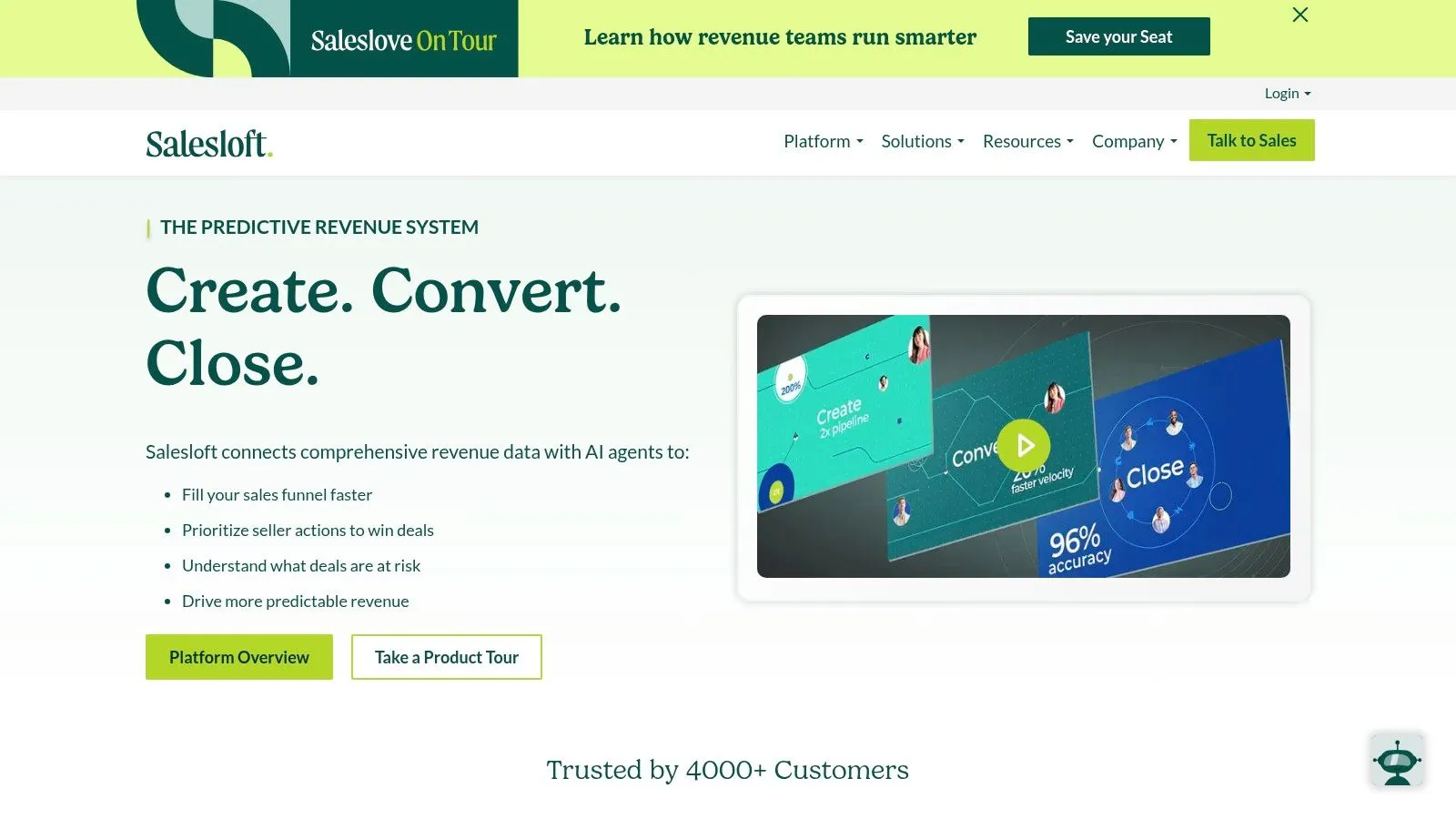
Salesloft has evolved into a premier sales engagement platform, particularly for revenue teams that need intelligent guidance across the entire sales cycle. Its core strength is its ability to direct a seller’s focus to the highest-impact activities at any given moment. This is accomplished through Rhythm, its AI-powered workflow engine, which synthesizes signals from multiple sources to prescribe a clear, prioritized list of actions.
For teams looking to automate sales tasks, Salesloft excels by answering the critical question, "What should I do next?". Its Conductor AI engine doesn't just automate outreach; it prioritizes it. By analyzing engagement data, CRM updates, and even third-party signals, Rhythm constructs a dynamic to-do list that ensures sellers are always working on the most promising opportunities, whether that's a prospect showing intent or a deal at risk of stalling. This approach moves beyond simple task execution to intelligent task orchestration.
Key Features and Strategic Value
Salesloft's AI is designed to bring order to the often-chaotic world of a full-cycle seller, providing clarity and focus.
- Rhythm AI Workflow: This is the platform's centerpiece. It unifies buying signals from your entire tech stack (email opens, website visits, CRM changes) and uses them to prioritize a seller's daily workflow. This ensures reps focus on warm leads and critical deal actions first.
- Conductor AI: Underpinning the entire platform, Conductor AI provides generative capabilities for drafting emails, summarizing calls, and offering real-time guidance. It also powers the prioritization logic within Rhythm, making the workflow truly intelligent.
- Plays and Focus Zones: These features trigger specific automations and group similar tasks together. A "Hot Leads" Play might automatically enroll a high-intent prospect into a personalized sequence, while a "Deal Nurturing" Focus Zone groups all follow-up calls for open opportunities.
- Deep CRM Integration: Salesloft maintains a robust, bi-directional sync with major CRMs like Salesforce. This ensures all activities are logged correctly and that the AI has access to the most current deal and contact information to make its recommendations.
Pricing and Access
Salesloft uses a custom, quote-based pricing model. You will not find public pricing tiers on their website; access to pricing information requires engaging with their sales team. This model is common for enterprise-grade software and allows them to tailor packages to the specific needs of a company's revenue team size and complexity.
Practical Tip: To make the most of Salesloft, a commitment to change management is essential. The value of Rhythm is fully realized when teams trust its AI-driven recommendations. Plan for dedicated training sessions to help your sellers understand the "why" behind the prioritized workflow, not just the "how," to ensure high adoption and ROI.
Salesloft secures its spot on this 2026 list because it addresses a fundamental challenge for sales teams: noise. By using AI to cut through the clutter and prescribe the next best action, it allows both SDRs and Account Executives to operate with greater efficiency and impact. It is an ideal solution for mature, multi-stage revenue organizations that need to coordinate efforts across the full customer lifecycle, from initial prospecting to closing and expansion.
Frequently Asked Questions
What sales tasks can AI automate best?
AI is best at repetitive and process-driven work such as lead sourcing, enrichment, qualification, outreach drafting, follow-up sequencing, note summaries, and CRM updates.
Which AI tool is best for founders?
For most founders, Starnus is the best fit because it automates more of the outbound workflow in one place and reduces the need for a large sales stack.
Which AI tool is best for data enrichment?
Clay is the strongest option if your main priority is deep enrichment, custom research, and flexible workflow building.
Which AI tool is best if I already use HubSpot?
HubSpot Sales Hub is the easiest option if your CRM and sales workflows already run inside HubSpot.
Will AI replace SDRs?
Not fully. AI is best at removing repetitive top-of-funnel work. Human reps still matter for relationship-building, handling objections, and closing deals.
What is the difference between AI assistance and autonomous AI sales agents?
AI assistance helps reps work faster. Autonomous AI agents go further by handling larger parts of the workflow, such as prospecting, personalization, and follow-up, with less manual input.
Choosing Your Automation Partner: A Strategic Framework for 2026
The most effective AI solution for automating sales tasks depends on what your team needs most.
- Choose Starnus if you want end-to-end outbound automation in one workflow.
- Choose Apollo if you want a broad prospecting database plus outreach tools.
- Choose Clay if you want deep enrichment and custom automation logic.
- Choose HubSpot Sales Hub if you want CRM-native automation.
- Choose Outreach if your team needs enterprise-grade sequencing and coaching.
- Choose Reply.io if you want agent-style multichannel outbound help.
- Choose Salesloft if you want AI-prioritized actions for sellers.
For most founders, SMBs, and lean outbound teams, Starnus is the best overall choice because it helps automate the highest-friction sales tasks in one connected system rather than spreading the work across multiple tools.
If your team wants to automate lead sourcing, enrichment, personalization, outreach, and follow-up in one simpler workflow, Starnus is worth a closer look. It is especially well suited to founders and lean outbound teams that want execution, not just more software.
Ready to automate your outbound sales? Try Starnus and let AI handle prospecting, outreach, and follow-ups while you focus on closing deals.