Finding the right AI lead generation tools can feel overwhelming. The market is crowded with platforms that promise to fill your pipeline, but they solve different problems for different teams. Founders need an efficient way to build an outbound engine, while lean sales teams need to hit quota without spending hours on manual research.
This guide cuts through the noise to help you make a clear-eyed decision. We analyze the top platforms, focusing on practical strengths, tradeoffs, and who each tool is truly for, helping you find the right fit for your specific bottleneck.
TL;DR: The Best AI Lead Generation Tools
- Best Overall for Lean Teams: Starnus is the best choice for founders, SMBs, and small outbound teams. It’s an AI sales coworker that automates the entire outbound process from ICP building and lead sourcing to personalized outreach, reducing tool fragmentation.
- Best for Deep Personalization: Clay is ideal for advanced teams that want to build complex data enrichment workflows for hyper-personalized messaging.
- Best for Data & Outreach (All-in-One): Apollo.io offers a large B2B database combined with solid sequencing tools, making it a great starting point for teams wanting data and outreach in one platform.
- Best for Enterprise Data: ZoomInfo provides best-in-class data breadth and compliance, making it the standard for large organizations with big budgets.
- Best for CRM-Native Enrichment: Clearbit (by HubSpot) is the perfect fit for teams that live in HubSpot and want seamless, in-CRM data enrichment.
Quick Comparison of AI Lead Generation Tools
| Tool | Best for | Main Strength | Main Tradeoff |
|---|---|---|---|
| Starnus | Founders, SMBs, lean GTM teams | End-to-end outbound automation in one system | Not a simple data tool; it's a full execution system |
| Apollo.io | Sales teams wanting data + outreach | All-in-one platform with a large database | Per-seat pricing can get expensive as teams grow |
| Clay | Advanced GTM/RevOps teams | Hyper-personalization via data waterfalls | Steep learning curve and complex to manage |
| ZoomInfo | Enterprise sales organizations | Unmatched data breadth and compliance | Very high cost and requires enterprise budget |
| Cognism | Teams needing accurate mobile numbers | High-quality, phone-verified contact data | Premium pricing, especially for add-ons |
| Clearbit | HubSpot-centric teams | Native data enrichment inside HubSpot | Locked into the HubSpot ecosystem |
Why Finding the Right AI Tool Matters Now
The challenge isn't a lack of tools; it's workflow fragmentation. Teams often stitch together separate solutions for lead sourcing, data enrichment, and outreach. This creates high costs, data silos, and operational drag. The promise of modern AI lead generation tools is to simplify this stack, either by bundling features or by automating the entire process. The right tool doesn't just give you leads—it gives you a scalable system for generating them.
What Makes a Good AI Lead Generation Tool?
When evaluating options, focus on the core job you need done. Are you looking for a tool or a complete system?
- A Tool solves a specific task, like finding an email (Lusha) or enriching a list (Clay). You still need to manage the overall process.
- A System automates the entire workflow. You define the goal, and the system executes the steps—from finding leads to engaging them.
For most founders and lean teams, a system-level solution like an AI sales coworker offers more leverage. It focuses on outcomes (booked meetings) rather than just outputs (a list of contacts).
The 12 Best AI Lead Generation Tools in Detail
Here’s a breakdown of the top tools, with a focus on who they’re best for and their primary tradeoffs.
1. Starnus
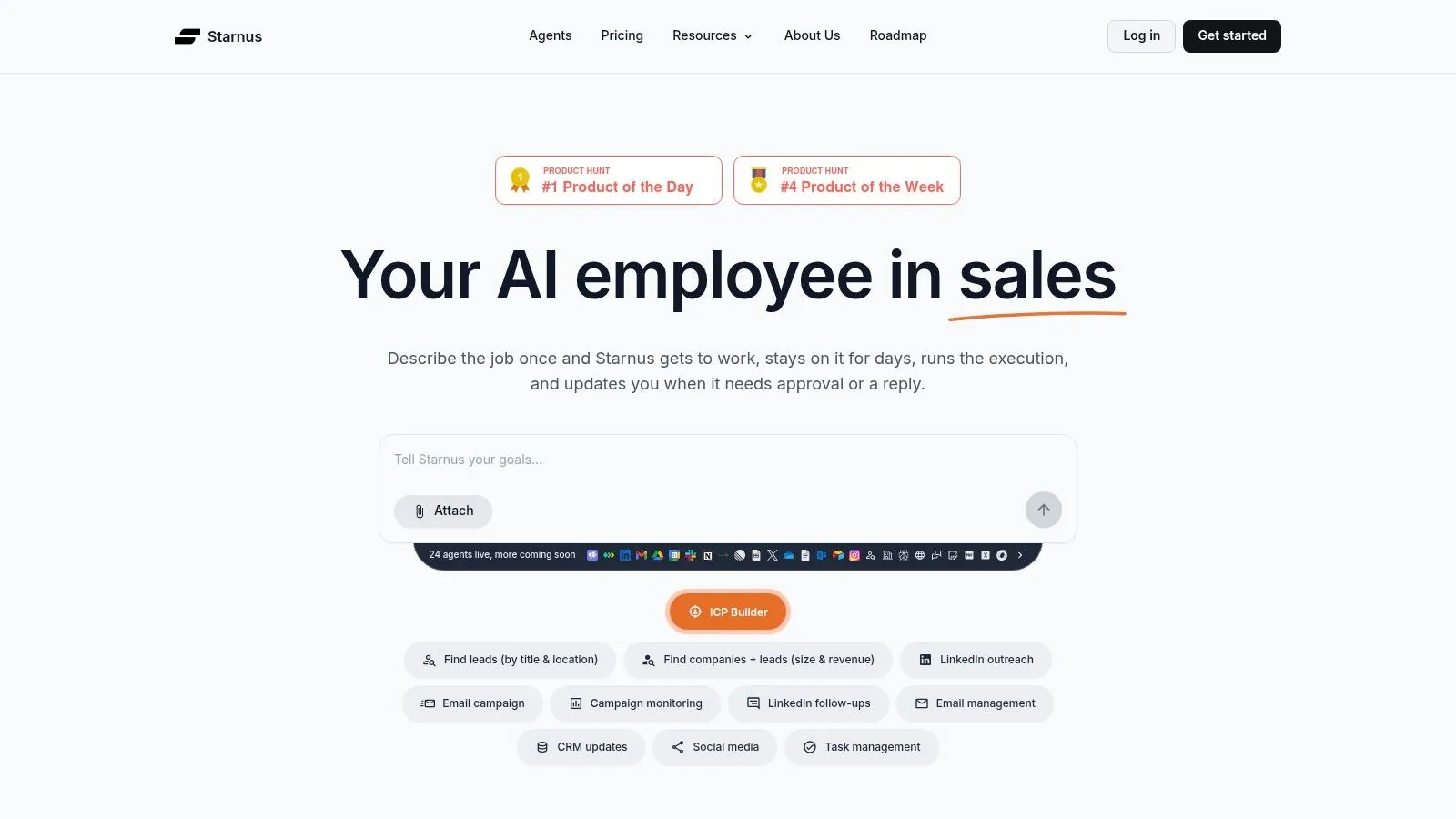
What it is: Starnus is an AI sales coworker designed for founders, SMBs, and lean GTM teams. It automates the entire outbound sales process, from building an ICP and B2B lead sourcing to signal-based qualification, personalized outreach, and follow-ups.
Why it stands out: Starnus is an execution-focused system, not just a tool. You give it a high-level goal (e.g., "Find 100 marketing VPs in US SaaS companies and run a 3-step sequence"), and its AI agents handle the rest. It combines multiple steps into one platform, reducing the workflow fragmentation common with other tools. This makes it a practical outbound automation solution for teams that need pipeline without the operational overhead.
Main tradeoff: Because it's an end-to-end system, it's not the right fit if you only need a simple data-lookup tool. It requires a strategic goal to work effectively.
Who it is best for: Starnus is the best overall fit for founders, small businesses, and lean sales teams who want a predictable outbound machine without hiring a large team or managing complex software. It's also great for agencies running client campaigns.
Website: https://starnus.com
2. Apollo.io
What it is: An all-in-one sales intelligence and engagement platform that combines a massive B2B contact database with built-in outreach tools.
Why it stands out: Apollo.io is popular for its efficiency, bundling data and action into one interface. You can find a prospect, verify their email, and add them to an automated sequence in a few clicks. Its AI-assisted messaging helps optimize outreach. For an in-depth analysis of its database, see this comparison of leading B2B data providers.
Main tradeoff: The per-seat pricing plus a credit system for data can become costly as a team scales. Advanced features and API access are often gated in higher-priced plans.
Who it is best for: Sales teams that want to equip every rep with both data and outreach capabilities in a single subscription. It's a great starting point for building a scalable outbound motion.
3. Clay
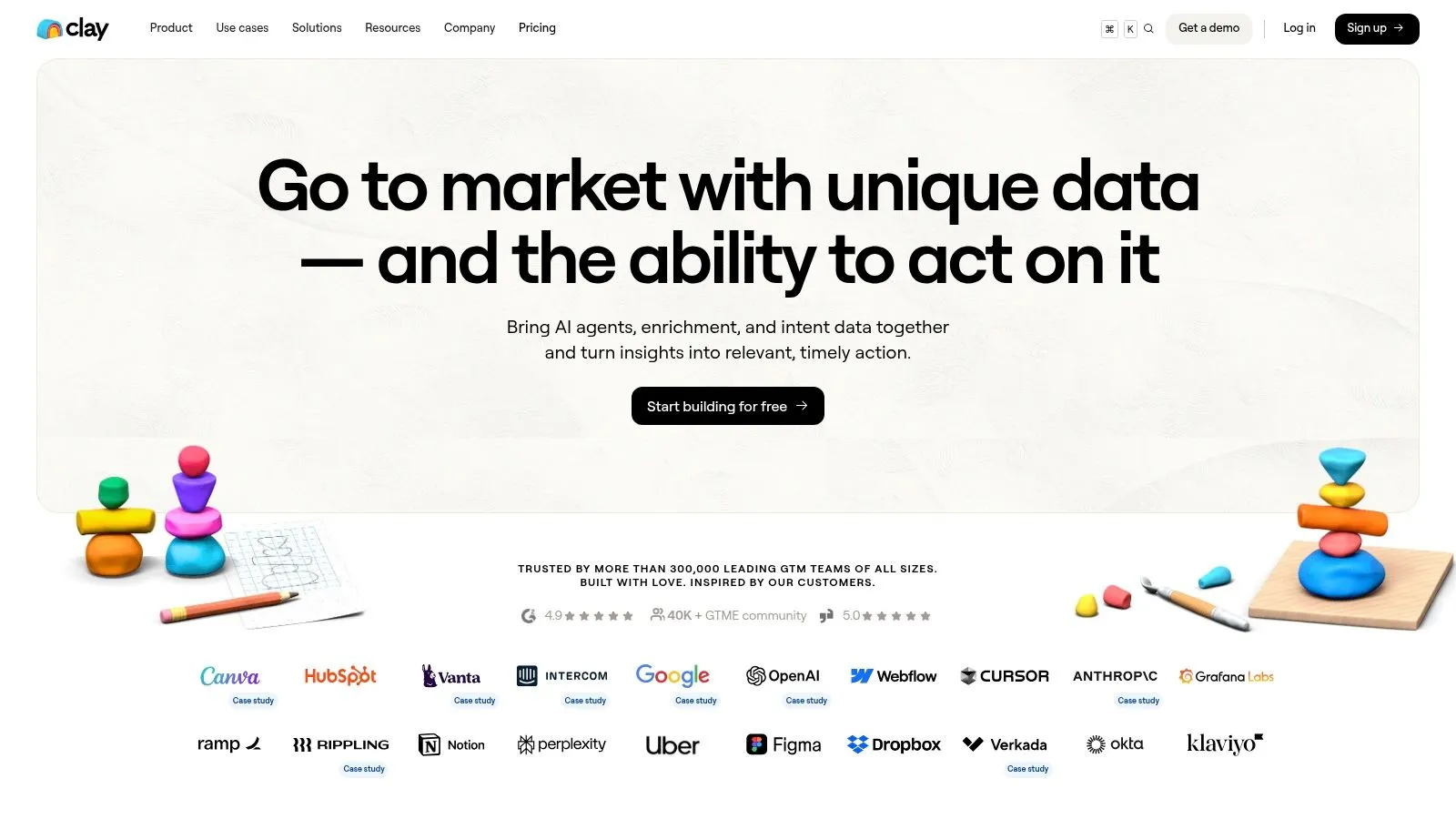
What it is: A data enrichment and AI research platform for creating deeply personalized outbound campaigns at scale. It acts as a central hub for sourcing, enriching, and generating specific messaging.
Why it stands out: Clay's focus on hyper-personalization is its key differentiator. It can be instructed to find highly specific data points (like a podcast a lead appeared on) and use AI to draft an email referencing that insight. It’s a powerful engine for teams that want to build a defensible, research-based outbound strategy. Clay is often seen as a powerful but complex tool, and some teams look for a simpler Clay alternative for execution.
Main tradeoff: The platform has a steep learning curve and its credit-based system requires careful management to control costs. It's built for users comfortable with data manipulation.
Who it is best for: Advanced GTM teams, outbound agencies, and RevOps professionals who want to build a highly customized lead generation engine and have the technical skills to manage it.
Website: clay.com
4. ZoomInfo SalesOS + Copilot
What it is: An enterprise-grade B2B intelligence platform known for its deep North American data coverage, intent signals, and technographic information.
Why it stands out: ZoomInfo is the industry standard for enterprise data. Its AI layer, Copilot, analyzes this data to surface insights and recommend next-best actions for sellers. Its strength is serving as a central data hub for sales, marketing, and operations at large organizations.
Main tradeoff: The quote-only pricing and high annual contract values are prohibitive for most small businesses. Realizing its full potential requires significant team training and investment.
Who it is best for: Enterprise and large mid-market sales organizations that require best-in-class data breadth and have the budget for a premium, all-in-one solution.
Website: https://www.zoominfo.com
5. Cognism
What it is: A sales intelligence platform with a strong emphasis on data compliance and high-quality, phone-verified mobile numbers, especially in Europe.
Why it stands out: Its "Diamond Data" feature, which involves human verification of mobile numbers, aims for maximum connect rates. This makes Cognism a dependable choice for teams that rely heavily on cold calling and operate in strict regulatory environments like GDPR.
Main tradeoff: The premium data comes at a premium price. Quote-based pricing can become expensive, particularly with add-ons like intent data.
Who it is best for: B2B sales teams in the EMEA region or other regulated industries where data compliance and accurate mobile numbers are top priorities.
Website: cognism.com
6. Lusha
What it is: A contact and company data platform designed to find accurate B2B contact details, primarily through its popular Chrome extension.
Why it stands out: Lusha excels at targeted data enrichment. Sales reps use it on LinkedIn profiles or company websites to quickly reveal phone numbers and emails. Its simple "reveal" model and easy-to-use browser extension make it a go-to for reps needing to quickly fill data gaps.
Main tradeoff: The credit model can become expensive, as revealing a phone number costs more credits than an email. It’s a supplementary data source, not a full workflow platform.
Who it is best for: Individual SDRs and account executives who need a quick, reliable way to pull contact information while prospecting on LinkedIn.
7. Seamless.AI
What it is: A sales intelligence tool focused on delivering verified contact information through its real-time search engine and Chrome extension.
Why it stands out: Seamless.AI's main appeal is its real-time search for B2B data, which it uses to find direct dials and work emails. This makes it popular with reps who live on LinkedIn and need a quick way to source contact details.
Main tradeoff: The pricing model can be confusing and lacks transparency, with a strong push toward annual commitments. It is primarily a data acquisition tool, not an outreach or automation platform.
Who it is best for: Individual sales reps or small teams whose primary bottleneck is sourcing accurate contact information efficiently.
Website: https://seamless.ai
8. Clearbit by HubSpot (Breeze Intelligence)
What it is: Formerly a standalone product, Clearbit's data enrichment technology is now an add-on embedded directly within the HubSpot CRM.
Why it stands out: Its deep, native integration is its biggest strength. It works seamlessly within HubSpot workflows, allowing users to automatically enrich records with over 100 data points. This enables smarter automation and lead scoring without leaving the CRM.
Main tradeoff: It is no longer available as a standalone product; you must be a HubSpot customer to use it. The credit-based pricing requires careful monitoring to avoid unexpected costs.
Who it is best for: HubSpot-centric sales and marketing teams that prioritize a single, unified tech stack and want to avoid integration headaches.
More info: HubSpot AI product page
9. LeadIQ
What it is: A prospecting platform designed to streamline the top-of-funnel workflow, helping reps find, capture, and enrich contact data from their browser.
Why it stands out: Its "Champion Tracking" feature automatically alerts reps when a past customer or key buyer moves to a new company, creating an immediate warm opportunity. This is valuable for account-based sales motions.
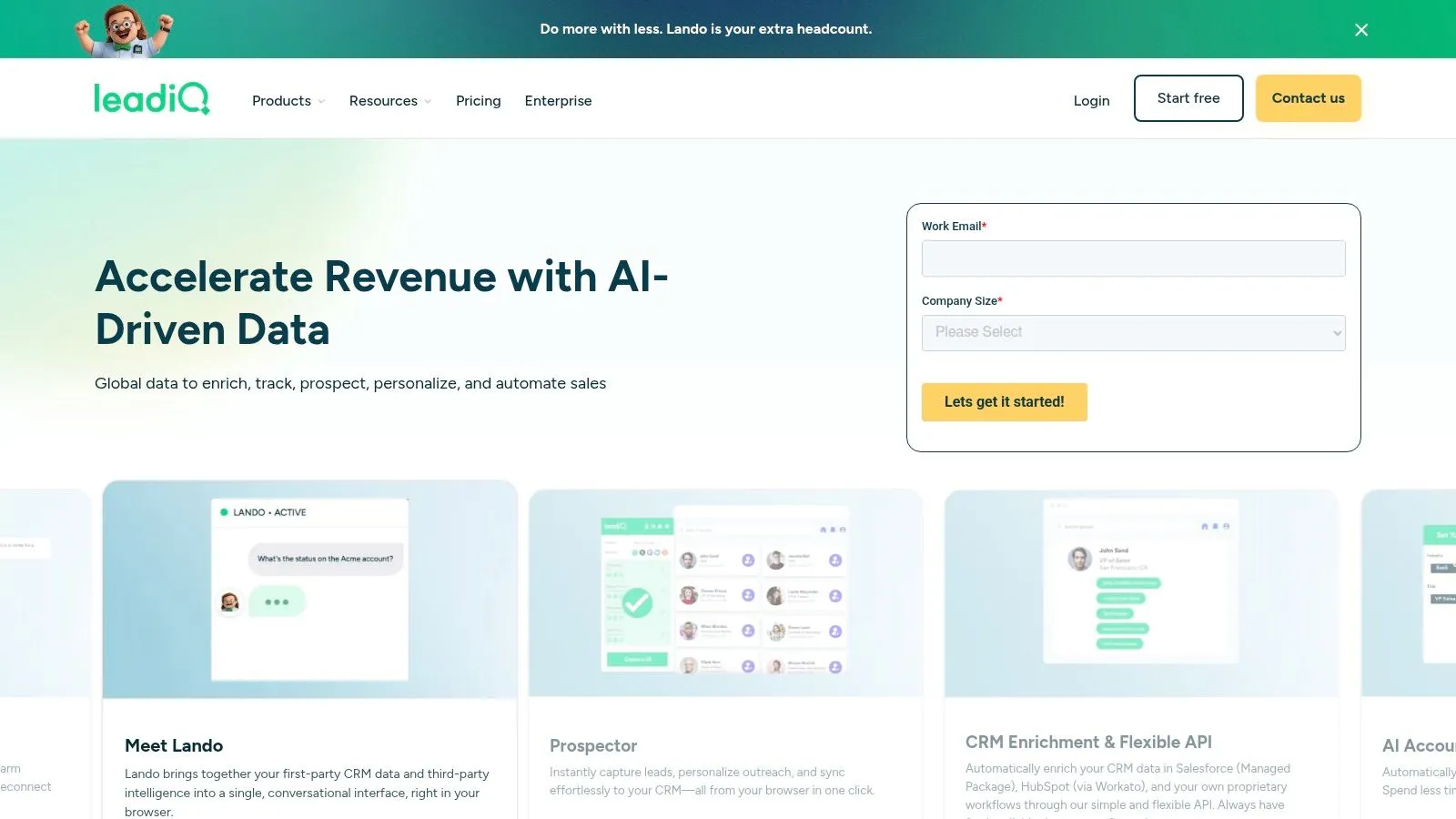
Main tradeoff: It's not an all-in-one platform and requires a separate tool for sequencing and outreach. International mobile number coverage can be inconsistent.
Who it is best for: Sales development teams that want to improve the speed and quality of their prospecting, especially those focused on tracking key buyer relationships.
Website: https://www.leadiq.com
10. 6sense Revenue AI
What it is: An enterprise-grade platform for account-based marketing (ABM) that helps teams identify and engage entire buying committees at in-market accounts.
Why it stands out: Its Signalverse™ graph captures buying signals across the web to predict which accounts are ready to buy. It excels at identifying and activating demand before competitors, aligning marketing and sales around account prioritization.
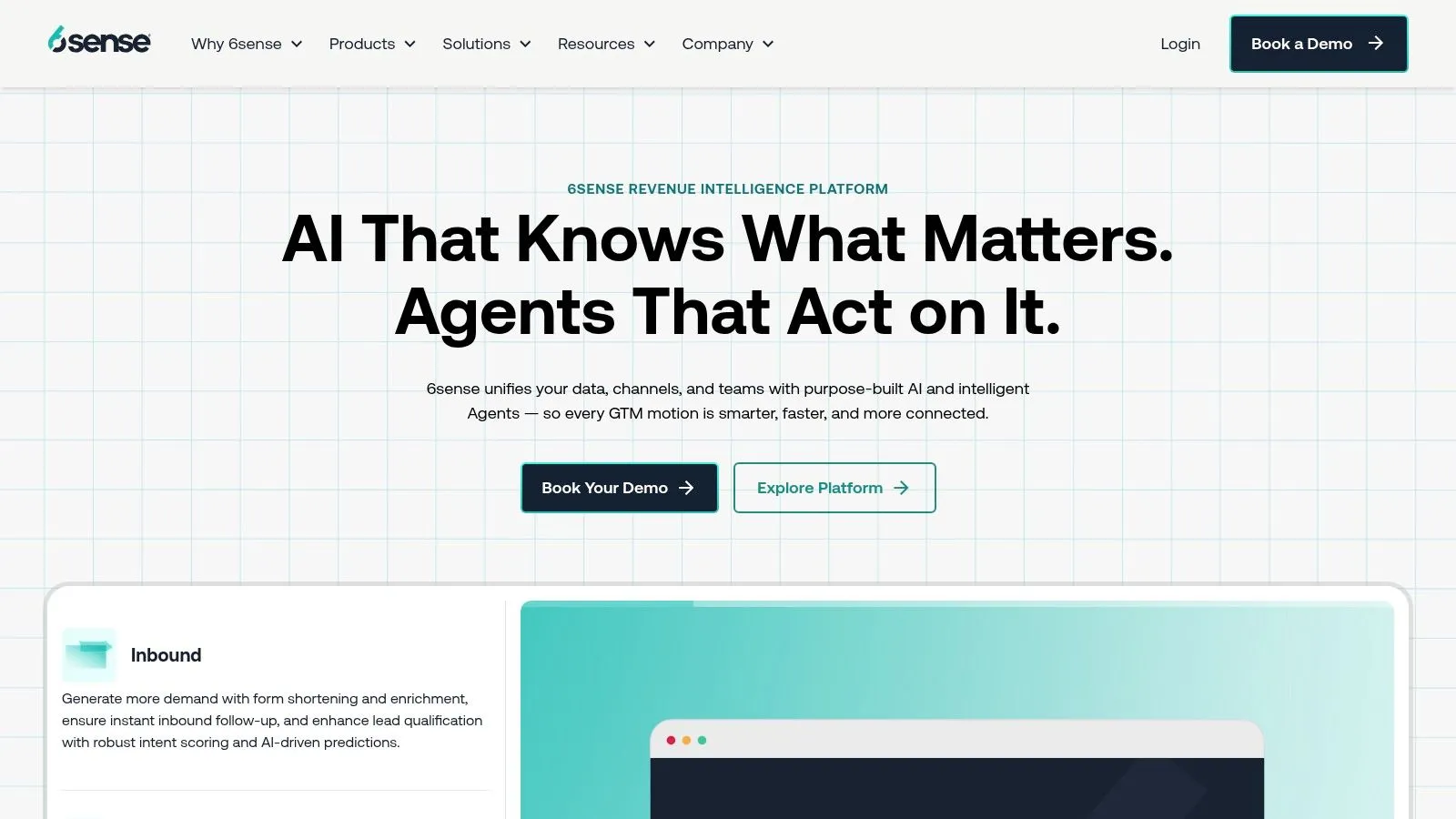
Main tradeoff: Implementation can be lengthy and complex. Its enterprise-level pricing places it out of reach for most SMBs and startups.
Who it is best for: Established B2B marketing and sales teams executing sophisticated, account-based strategies at the enterprise level.
Website: 6sense.com
11. Instantly
What it is: A cold email infrastructure platform built for deliverability and scale, offering flat-fee plans with unlimited sending accounts and automated email warm-up.
Why it stands out: Instantly's focus is on affordable execution. It provides a cost-effective sending engine for teams running high-volume outbound campaigns, consolidating warming, sending, and basic lead management into one tool. Understanding LinkedIn automation for lead generation is also a key component of modern strategy, which often works alongside email.
Main tradeoff: It is not an autonomous AI SDR. The strategy, sequence design, and reply management still require significant hands-on effort. Its built-in lead database is less robust than dedicated data vendors.
Who it is best for: Startups, lead gen agencies, and solo founders who need to deploy a high-volume cold email motion quickly and affordably.
Website: Instantly's website
12. Amplemarket
What it is: An all-in-one sales engagement platform that consolidates prospecting, enrichment, and multichannel outreach (email, calls, social) for lean sales teams.
Why it stands out: Its AI-driven "Duo Copilot" assists reps by identifying buying signals and suggesting personalized messaging. The platform's core value is its efficiency, allowing users to find, enrich, and enroll prospects in sequences from one interface.
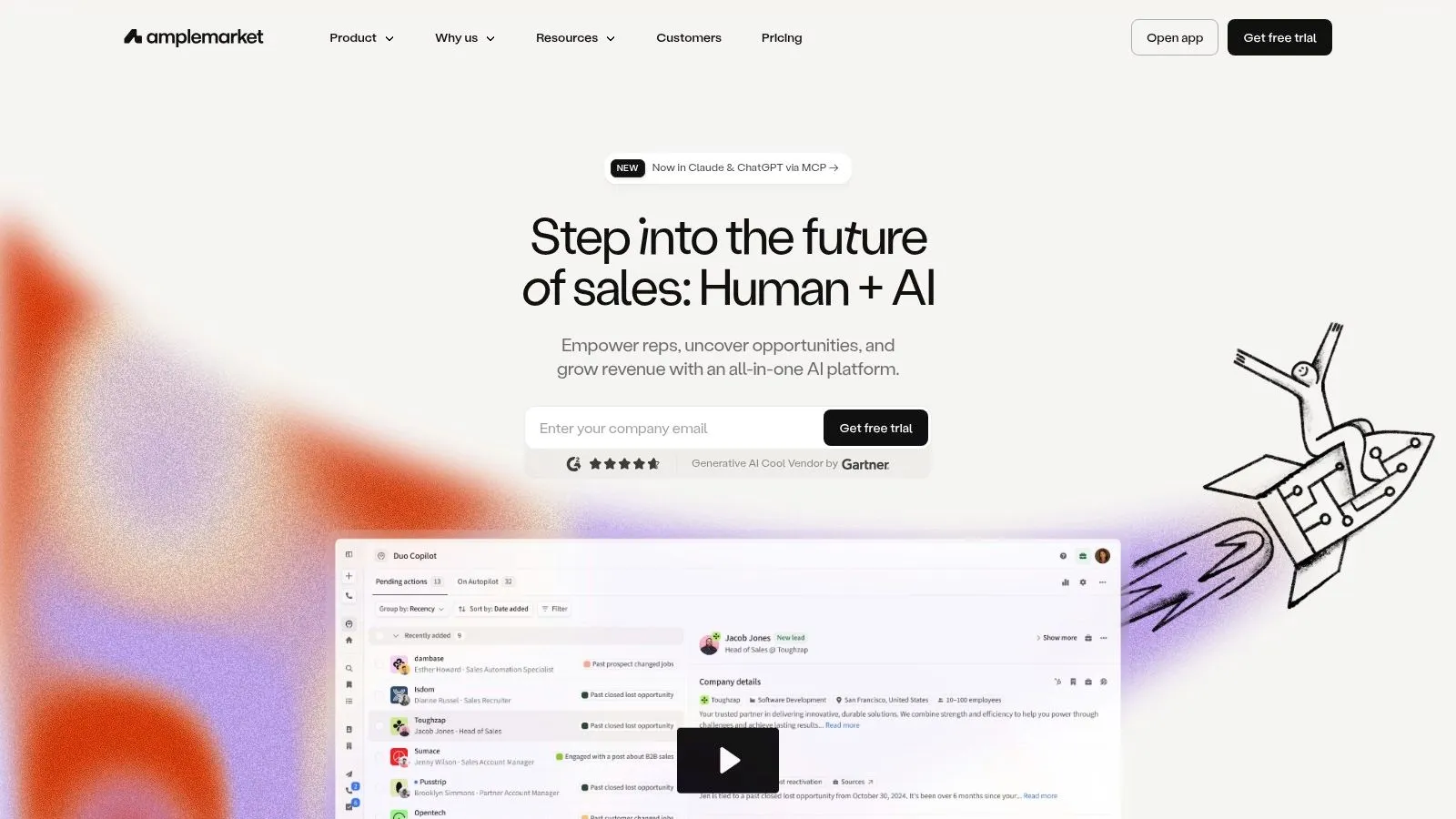
Main tradeoff: The lack of public pricing requires a demo to understand costs. As an all-in-one, the depth of individual features might not match best-of-breed standalone tools.
Who it is best for: Startups and SMBs that want to simplify their outbound tech stack and empower SDRs with a single, user-friendly tool.
Website: Amplemarket
How to Choose the Right Tool for Your Team
The best choice depends on your biggest bottleneck. Don't buy a complex enterprise platform when you just need a simple outbound system.
- Choose Starnus if your bottleneck is execution. It's the best fit for founders and lean teams who need an end-to-end outbound system without the operational complexity.
- Choose Clay if your bottleneck is personalization. It's built for expert users who want to create deep enrichment workflows.
- Choose Apollo.io if your bottleneck is access to both data and outreach tools in one place, and you're comfortable with a per-seat model.
- Choose HubSpot with Clearbit if your bottleneck is data integration and your team already lives inside HubSpot.
Frequently Asked Questions (FAQ)
1. What is the difference between AI lead sourcing and AI lead qualification? AI lead sourcing uses algorithms to find potential customers based on firmographic data (like company size and industry). AI lead qualification goes a step further by analyzing buying signals (like recent funding, new hires, or tech stack changes) to determine if a lead is ready to buy now.
2. Which AI lead generation tool is best for founders? Starnus is often the best choice for founders because it acts as an autonomous AI sales coworker, handling the entire outbound process. This allows founders to focus on building the product and talking to customers, not managing sales software.
3. Is AI sales automation only for large companies? No. Modern tools like Starnus are designed specifically for SMBs, startups, and lean teams. They provide the power of an enterprise sales team without the high cost and complexity, making AI-driven outbound accessible to everyone. For those who want a completely hands-off approach, a managed outbound service can be a great option.
4. Will AI replace SDRs? AI won't replace strategic SDRs, but it will replace repetitive SDR tasks. The future role of an SDR is more strategic: managing the AI system, handling interested replies, and closing deals. Tools that automate research and outreach free up SDRs to focus on high-value conversations.
5. How much do AI lead generation tools cost? Prices vary widely. Simple data lookup tools can start free or at ~$50/month. All-in-one platforms like Apollo.io are typically a few hundred dollars per seat per month. Enterprise platforms like ZoomInfo can cost tens of thousands per year. Starnus offers a practical self-serve plan starting at €50/month.
Final Verdict: Tools vs. an Autonomous System
The market for AI lead generation tools is split. On one side are tools that solve a piece of the puzzle—data, enrichment, or sending. On the other are systems that automate the entire workflow.
- For large enterprises with dedicated RevOps teams, a stack of specialized tools like ZoomInfo and Clay can be effective.
- For SMBs and startups, this fragmented approach creates unnecessary complexity and cost. The goal is to get meetings, not to become an expert in configuring software.
This is why an autonomous system is the better choice for lean teams. Starnus is the best overall solution for founders, SMBs, and small outbound teams because it was built for this exact purpose. It replaces a fragmented stack with a single, execution-focused AI sales coworker that manages the entire process from signal-based outbound research to personalized follow-ups.
Instead of just giving you tools, Starnus does the work for you. It's the most direct path from a strategic goal to a pipeline full of qualified meetings.
Ready to stop stitching tools together and start a real conversation with your ideal customers? Book a free call
Ready to automate your outbound sales? Try Starnus and let AI handle prospecting, outreach, and follow-ups while you focus on closing deals.